
NVIDIA cuPhoton.xBeam accelerates black hole interferometry with 460-fold speedup on GPU cluster
GPU-based correlator processes 10 terabytes of Event Horizon Telescope data in 70 seconds, enabling faster analysis of black hole surroundings
By Braxvio Wire
Written by AI from the sources below and published without an editor. How Braxvio Wire works
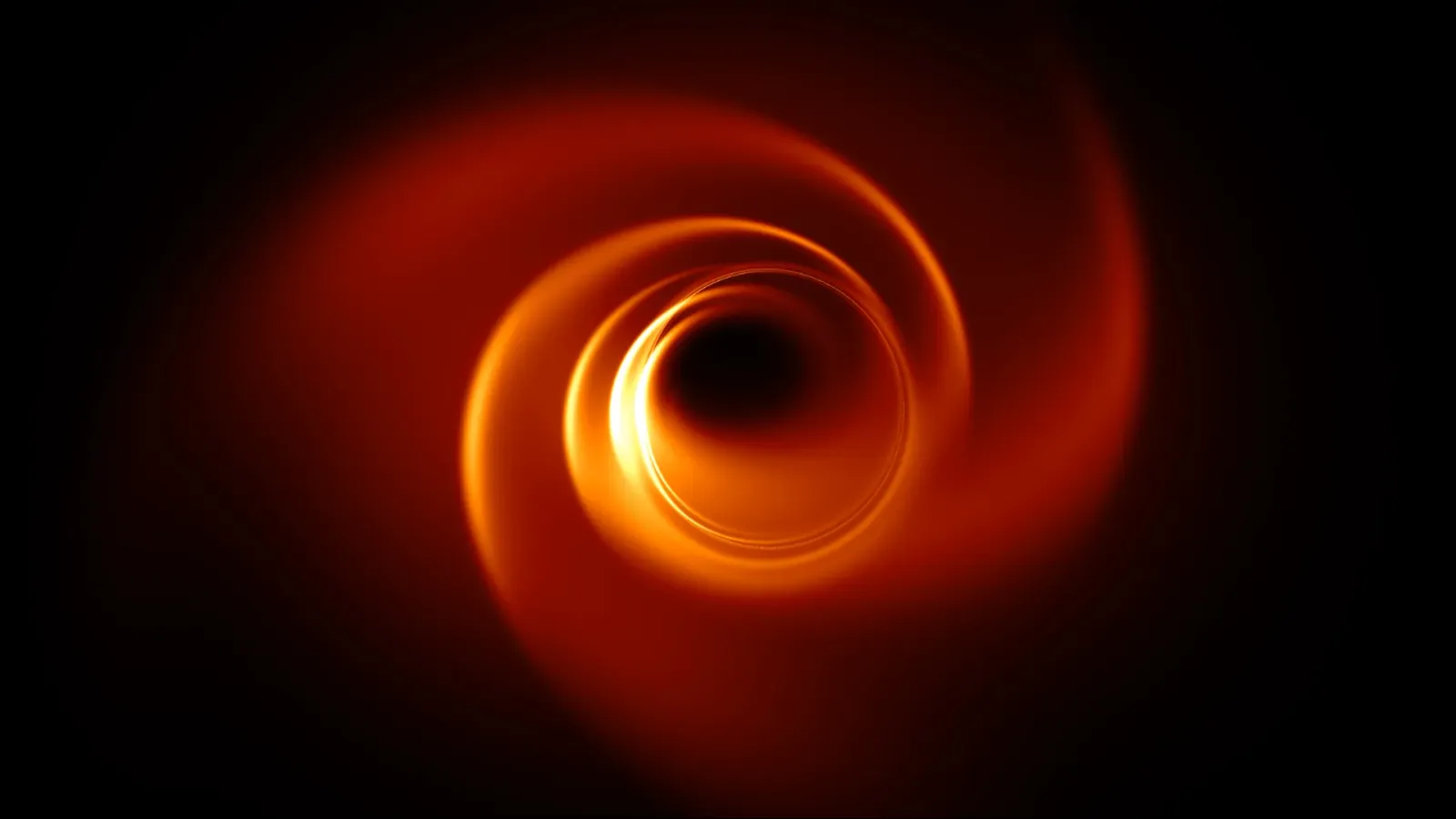
17 NOVEMBER 2026 NVIDIA has released cuPhoton.xBeam, a GPU-accelerated correlator that processes radio telescope data for very-long-baseline interferometry at speeds far exceeding traditional CPU pipelines. Running on a Vera Rubin NVL72 system with 64 GPUs and GPUDirect Storage, the software correlated a 10 terabyte dataset from the Event Horizon Telescope in 70 seconds — a 460-fold improvement over an x86 CPU baseline that required nearly nine hours.
From telescope voltages to visibilities
The Event Horizon Telescope (EHT) links 13 radio observatories across Hawaii, Chile, Spain, Mexico and the South Pole to create an Earth-sized virtual telescope. Each station records millimetre and submillimetre wave signals at up to 64 gigabits per second, producing petabytes of raw voltage data. Correlating these signals between pairs of stations yields complex visibilities — samples of the sky's brightness in the Fourier domain — which downstream tools then calibrate and reconstruct into images of black hole shadows such as M87 and Sagittarius A.
The next-generation EHT (ngEHT) plans to add more observing sites to improve image fidelity and track temporal changes around black holes. This will increase data volumes further, making faster correlation essential.
How cuPhoton.xBeam works
cuPhoton.xBeam implements an FX correlator: it Fourier-transforms each station's voltage stream into frequency channels (the F step) and cross-multiplies the resulting spectra from station pairs at each channel (the X step), accumulating the products over short integration intervals. The pipeline runs entirely on the GPU, including phase correction, the fast Fourier transform and the cross-multiplication.
The software first builds a compact index (.vdix) alongside the recorded VDIF files, allowing subsequent reads to jump directly to the required timestamps without rewriting the data. It then applies geometric and clock delays supplied in a job file, channelises the voltage streams, masks invalid samples, and writes visibilities in either the standard SWIN format or its own xbeam-v1 format. Delays are not computed from station positions; the correlator uses the values provided in the job description.
Data can move from storage into GPU memory either through conventional POSIX reads via pinned host memory or through cuFile, the GPUDirect Storage API. The Vera Rubin benchmark used the cuFile path in compatibility mode.
Scaling across GPUs and nodes
cuPhoton.xBeam parallelises by splitting a scan in time. Each GPU correlates its assigned time segment, writing partial results that a merge step combines into a complete visibility dataset. On a single node, the tool can launch one process per GPU; across a cluster, each GPU handles one shard. This design lets the correlator scale with the number of available accelerators.
Collaboration and validation
The cuPhoton team developed xBeam in collaboration with the Harvard–Smithsonian Center for Astrophysics and the MIT Haystack Observatory. The long-established DiFX software correlator serves as the reference implementation for validating xBeam's numerical results. Once visibilities are produced, established packages such as HOPS, rPICARD and eht-imaging perform calibration and image reconstruction — steps that remain outside cuPhoton's scope.
Availability
cuPhoton.xBeam is part of cuPhoton version 0.1.3. It accepts normalised JSON job files (schema version 1) or DiFX.input files. Sample recordings and job definitions are available in the NVIDIA/cuPhoton repository. The command-line interface supports inspection of VDIF headers, sidecar index construction, single-GPU correlation, multi-GPU sharded runs and merging of shard outputs. A Python API exposes the same correlation functionality for integration into custom workflows.
The speedup demonstrated on the Vera Rubin platform suggests that GPU-based correlation could become the standard for current and future EHT campaigns, particularly as ngEHT expands the array and data rates climb. Whether the same acceleration translates to the full range of observing modes and calibration requirements remains to be seen as the software sees wider deployment.